Building the Romanian Market
The Romanian pig sector has changed significantly over the past twenty years. New companies have been established. Domestic piglet production has grown. Professional producers invested in genetics, health, and biosecurity. At the same time, African swine fever continues to make the market unpredictable. VAEX adapted alongside the market. What once began mainly as trade based on imported animals has grown into a local trading organization. Today, more than 90% of the piglets traded by VAEX Romania come from Romanian companies.
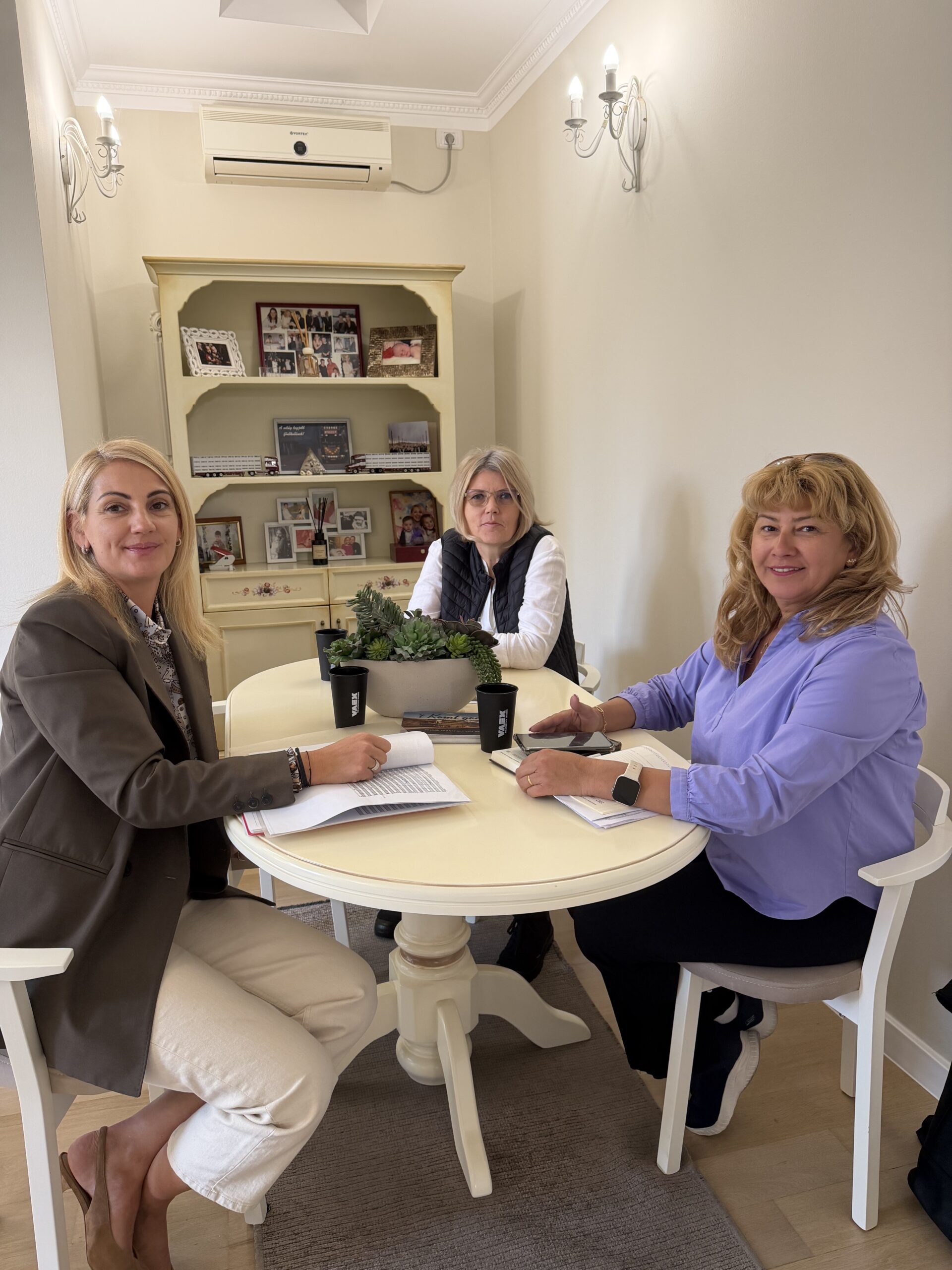
Behind this development stands the VAEX Romania team. Carmen Rădulescu manages the organization and commercial activities, Cecilia is on the road daily visiting customers and suppliers, Adina supports the trade from Sales Support, and Eva handles administration and accounting.
In Conversation with Carmen
When Carmen started working with VAEX in 2007, VAEX Romania did not yet exist. She had her own company, Activtur, and her first tasks for VAEX actually involved cattle. “I started loading bulls for export to Spain and Croatia together with Pim Govers.” Dirk Govers and a colleague were already working on developing the Romanian piglet market at that time. Carmen initially got involved for a practical reason: many Romanian farmers did not speak English. She helped with translation.
One conversation led to another. She visited companies, spoke with customers, and became increasingly involved in the piglet trade. Eventually, the Romanian market became her responsibility. Today, she does this together with Adina, Cecilia, and Eva. “What we have built here is teamwork. Cecilia is on the road a lot, but behind the scenes, Adina and Eva make sure the commercial, administrative, and financial side keeps running smoothly.”
Starting from Scratch
“In the beginning, everything was a challenge,” Carmen says. She knew almost nothing about piglets or the pork market. She had never visited a professional sow farm. Her experience with pigs was limited to a few animals she had seen in her aunt’s backyard. But she had one advantage. Many of her first customers were also still learning. Between 2007 and 2009, many new pig fattening farms were built in Romania. Many companies had about 2,000 places, and some investors came from completely different sectors.
“They had businesses in totally different industries and sometimes knew little themselves about keeping pigs.” Carmen visited companies while they were still under construction. Later, VAEX supplied the piglets to fill these barns. She learned about health, genetics, quality, planning, and the commercial side of the sector, while many of her customers were learning how to run their new businesses at the same time. That shared history laid the foundation for relationships that would last for years.
A Market in Need of Piglets
Romania did not have enough domestic piglet production to fill all the newly built fattening capacity. Imports therefore became an important part of the market. Over the years, VAEX’s volumes rose and fell with market conditions. Customers grew, stopped, or changed strategies. Disease outbreaks disrupted trade. VAEX remained active. According to Carmen, that continuity is one of the reasons for the company’s position today. “We have remained present in the market as a team and tried to stay reliable, even when circumstances were difficult.” VAEX Romania currently trades about 5,000 piglets per week.
But the most important change is not in the volume. It’s about the origin of the piglets.
More than 90% Romanian
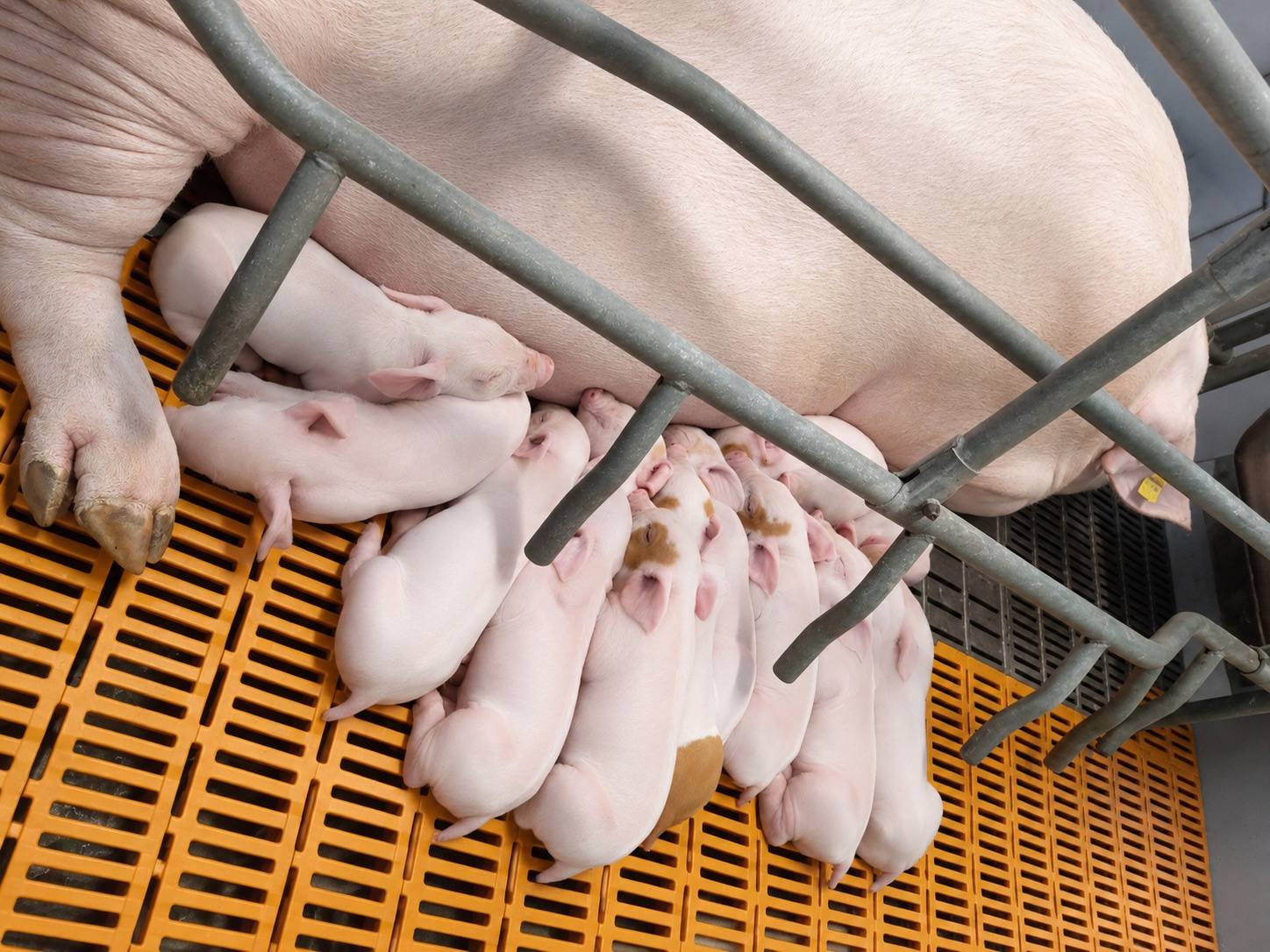
More than 90% of the piglets VAEX Romania trades today come from Romanian companies. For Carmen, this development says a lot about how far the Romanian sector has come. “We are proud that now more than 90% of our piglets come from Romania.” According to her, the quality of Romanian piglets has improved enormously. New sow populations have led to better health status and genetics. Romanian pig fatteners also increasingly see the advantages of locally produced piglets: shorter transport distances, closer contact with the supplier, and good technical quality.
When plans change overnight
When Carmen talks about the Romanian market, one word keeps coming up: flexibility. ASF makes that flexibility essential. A sow farm can be ready to supply piglets one day and suddenly face transport restrictions the next. Recently, a customer needed about 2,000 piglets to fill a barn. The supplier was chosen and the delivery was scheduled. Then ASF was detected in the region. The sow farm received thirty days of transport restrictions and was no longer allowed to move the animals. The customer still needed 2,000 piglets.
“That’s why we looked for another supplier with the same health status and arranged the delivery from there.” The ability to switch between suppliers and customers is a key part of VAEX Romania.
Supplier today, customer tomorrow
Sometimes the roles are completely reversed. For years, VAEX bought piglets from Veres Agro. After an ASF outbreak, about 35,000 animals had to be culled. The supplier suddenly became a customer. VAEX started supplying piglets to the company. When their own production is back up to standard, VAEX expects to start buying piglets from Veres Agro again. For Carmen, this shows how a long-term relationship should work. “You have to be there for your partners in both good and difficult times.”
More production, new questions
In Romania, several new sow projects are operational or under construction. This means more Romanian piglets are becoming available. Carmen sees a new challenge in this: when domestic piglet production grows faster than the available fattening capacity, Romania needs extra sales markets. ASF currently limits many export opportunities. “If we can get ASF under better control and reopen export markets, Romania could develop a much stronger pig sector.” VAEX’s international network could then become important again, not primarily to bring animals into Romania, but to give Romanian producers access to markets outside the country.
VAEX Romania in brief
- – 2007: start of the collaboration with Carmen.
- – About 5,000 piglets traded per week.
- – More than 90% of the traded piglets come from Romania.
- – Piglets are the core activity; slaughter pigs are an additional service for customers.

Magazine
Our magazine offers you a glimpse into the world of international pig and livestock trade. With up-to-date market information, inspiring stories, and practical insights. For everyone who wants to stay informed and discover new opportunities.