Animal health
This is a year in which animal health in Europe is under the microscope. While in one country the situation seems stable again, in another new outbreaks are emerging. From bluetongue in the Netherlands to African swine fever in various parts of Europe, as a trading partner you have to stay sharp. And above all: well informed.
Smart moves under disease pressure: how VAEX keeps trade moving
PRRS: EUROPEAN APPROACH, EUROPEAN SOLUTIONS
PRRS is not a notifiable disease, unlike some other diseases discussed later, but it remains an important topic within the pig sector. Most farms are originally PRRS-positive, but increasingly you see regions or groups of farms that are PRRS-negative. There is no right or wrong, but it is interesting to see how this differs across countries and regions in Europe. In areas with many pigs, it is difficult to make farms PRRS-negative; this is only possible with a joint approach. In regions with fewer pigs, it is easier to keep the virus out.
HUNGARY: Announced in 2014 its intention to become PRRS-free. Later, this even became mandatory. With strict measures, such as depop-repop and an import ban on PRRS-positive animals, they succeeded in 2021. Since then, it has officially become the first country to achieve PRRS-negative status—a remarkable achievement.
DENMARK: They have also indicated their aim to become a fully PRRS-free country. All farms are now required to report their PRRS status annually. One region is already PRRS-negative. The further approach is yet to be determined.
SPAIN: A few years ago, in addition to the European and American PRRS variants, a third strain emerged: the Rosalia strain. This aggressive variant causes major problems, as there is still no vaccine available. Outbreaks have a huge impact on the production figures of pig farms.
ITALY: In northern Italy, pig density is high, so nearly all farms are PRRS-positive. They therefore prefer to purchase PRRS-positive animals and ensure they are well vaccinated.
EASTERN EUROPE: New breeding farms in Eastern Europe often start with PRRS-negative animals. Because pig density is lower there, it is easier to maintain that status.
NETHERLANDS: In some regions, pig density is high, making it difficult to achieve PRRS-negative status on farms. Nevertheless, it is increasingly successful, thanks to a joint approach and good health protocols. Other farms choose to vaccinate their animals.
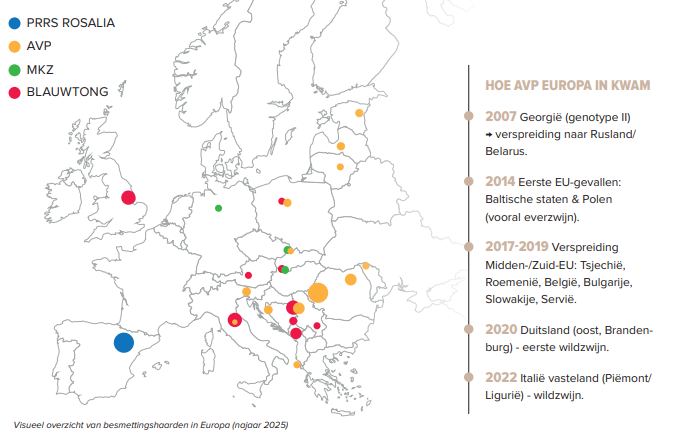
AFRICAN SWINE FEVER: PREVENTION IS BETTER
Where we usually saw ASF in Eastern Europe, this year it came close. The virus had previously appeared in Belgium, but the situation there shows that it can also disappear again. Last year, infected wild boars were found in western Germany, close to the Netherlands.
Where outbreaks occur, authorities intervene immediately and strict monitoring is implemented. This requires extra attention for transport movements: additional cleaning rounds, clear information for drivers, and close supervision of the routes we travel. Because one thing is certain: prevention is better than cure.
How it spreads
ASF moves through Europe in two ways. Slowly via wild boars and especially via human movement: materials, vehicles, and contaminated meat products.
This combination explains why there are periods of calm, followed by new hotspots on the map. It is not a straight line, but more of a wave pattern.
What you see during an outbreak
Authorities work with zones, monitoring, and sometimes fencing in the wild to contain the area. In wild boars, infections often continue to circulate longer; in farmed pigs, you want to intervene quickly to prevent further spread. This interplay between wild and farmed animals determines the pace of the outbreak.
Seasons and patterns
It affects trade in Romania, Serbia, Croatia, and Italy. Regions there regularly go into 'lockdown', which changes routes, shifts shipments, and requires us to adjust our planning more quickly.
ASF does not behave seasonally like the flu, but there is a rhythm to everything around it. Busy roads, wildlife migration, recreation, and trade peaks increase the risk of new introductions. That is why there are periods when the map barely changes for weeks, followed by moments when suddenly a lot starts happening.
Where it is heading
The expectation: ASF will continue to move with Europe. Not in a straight line, but with recurring patterns, clusters in wildlife, occasionally a farm, then a reduction due to measures. Anyone who reads the map, the rules, and the reports will see this cycle repeat. There is still no vaccine available against ASF, so prevention, hygiene, and strict control remain essential.
Foot-and-mouth disease: cooperation pays off
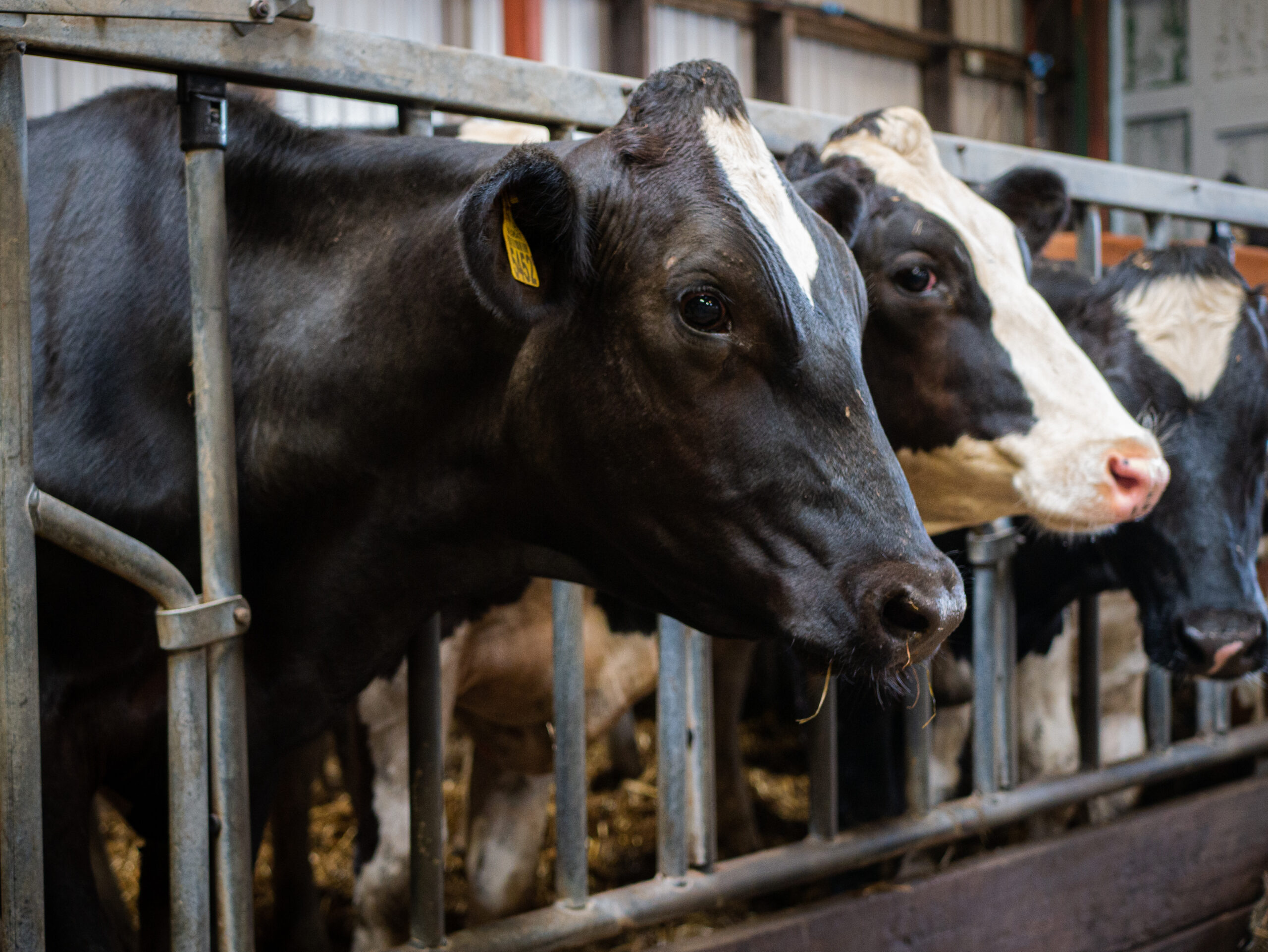
In Germany, the first case of foot-and-mouth disease (FMD) was detected at the beginning of 2025. Shortly afterwards, cases were reported in Hungary and Slovakia. As a result, trade there was temporarily halted, as it is highly contagious. The virus can easily travel via vehicles, clothing, or feed transport.
The disease mainly affects cattle, but pigs are also susceptible. Pigs usually do not become seriously ill, but they can carry and spread the virus, which makes swift and strict measures even more important. Cattle can develop fever and blisters in the mouth and on the feet, causing them to eat less and walk poorly.
Despite the changing market situation, we continuously look for new transport routes and ways to keep serving our customers. Flexibility and cooperation make the difference, especially in times when circumstances can change rapidly.
What does VAEX actually do?
Whenever a disease flares up somewhere in Europe, we take action. We do this by:
✔ Using our extensive European network to keep searching for solutions.
✔ Finding alternative loading locations with our transport partners.
✔ Providing clear advice on hygiene, ventilation, and protection.
✔ Adjusting routes if countries (temporarily) close their borders.
Our strength lies in speed, oversight, and experience. That's why we can keep operating, even under pressure.
BLUETONGUE: BETTER PREPARED THAN EVER
Bluetongue has not disappeared. In the Netherlands, Belgium, and Germany,
we are seeing new infections, often at the same hotspots
as last year. The virus is circulating widely within the EU.
Cattle crossing borders only do so
with a recent negative test. For export outside the EU,
stricter requirements apply: sometimes up to 30 days quarantine at
an approved location, with strict monitoring, and sometimes
no possibility for export at all.
We work with up-to-date information and, through government agencies,
we assess what is possible in terms of supply and demand: whether to proceed or not,
and exactly what is needed to keep things moving.
Animal health in Europe remains a challenge,
with varying situations per region and per disease.
Bluetongue is still present in large parts of
Europe and shows how important it is to stay up-to-date,
respond quickly, and work together. At VAEX,
we closely follow developments and translate
that knowledge into practical solutions for our clients
and partners. We don't think in terms of problems, but in routes,
actions, and collaboration.
Did you know...
✔ New vaccines against BTV-3 have now been approved in Europe.
✔ Since the first outbreaks in 2006, bluetongue has become a structural risk within the EU.
✔ The midge-free period no longer exists, as for several years now, midges remain active inside barns.

Magazine
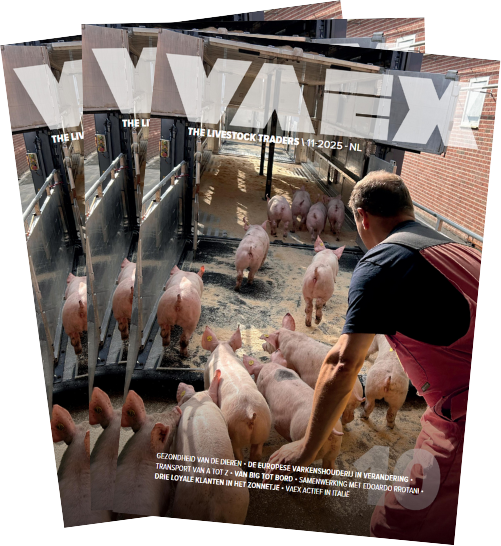
Our magazine offers you a glimpse into the world of international pig and livestock trade. With up-to-date market information, inspiring stories, and practical insights. For everyone who wants to stay informed and discover new opportunities.