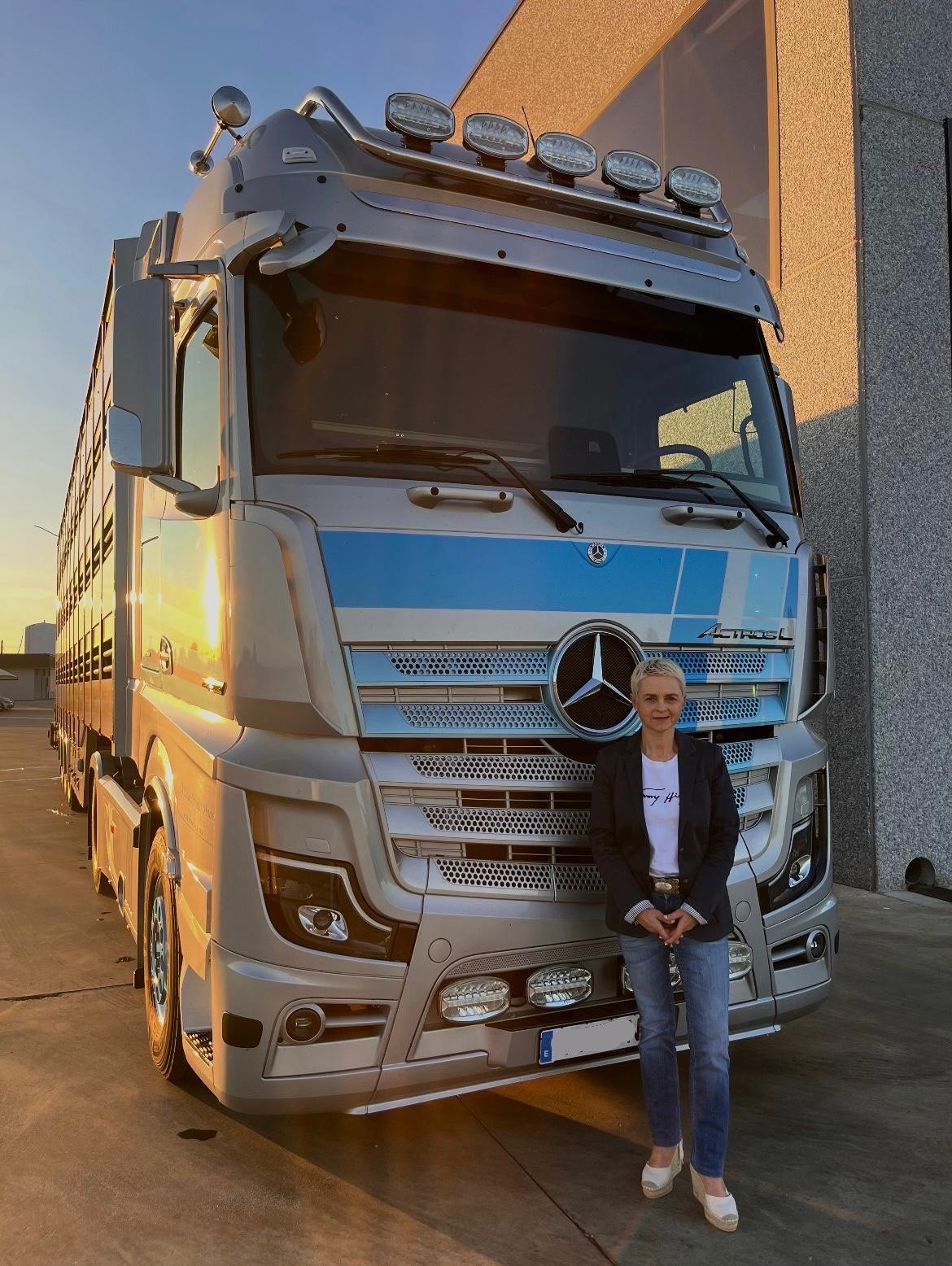
New rules must be workable – for both animals and farmers
Isabel Pinto (ANTA) on the revision of the European animal transport regulation
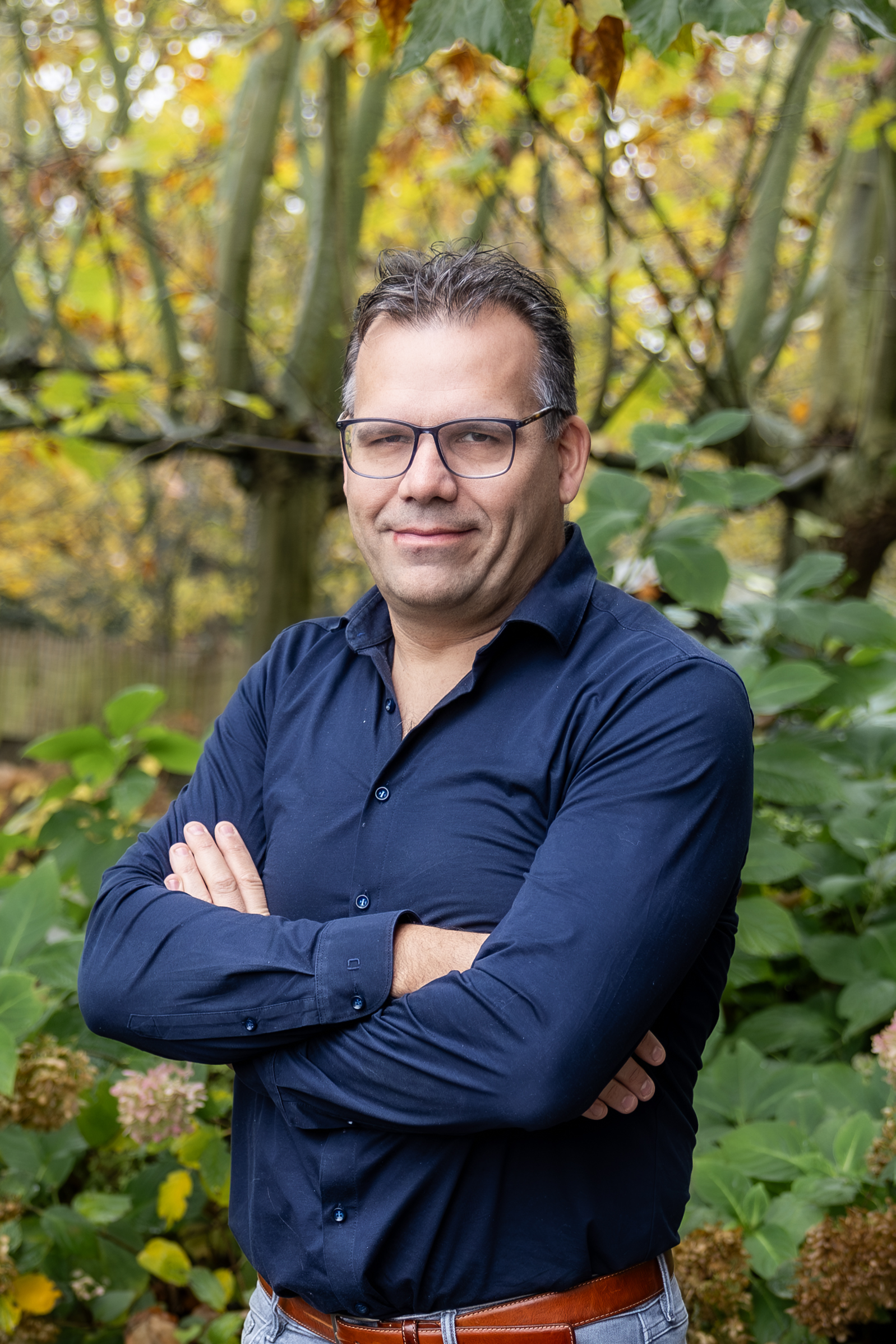
The European animal transport regulation is about to change. And this affects everyone in the sector – from livestock farmers to transporters. Isabel Pinto, president of the Spanish industry association ANTA, is closely following developments. In this interview, she shares her perspective on the proposed changes and explains why good intentions don’t always lead to better outcomes. “The new rules should improve animal welfare, but they also need to remain workable.”
Travel, rest, and calculation
According to Pinto, the discussion mainly revolves around three key points: travel times, temperatures, and densities.
“What many people forget is that most of the stress for an animal occurs during loading and unloading,” she says. “So if we shorten the maximum travel time, as is currently proposed (from 24 to 21 hours), we actually create more loading and unloading moments. And that’s anything but beneficial for animal welfare.”
The temperature aspect also raises questions. “We have long advocated that not only the temperature in the loading compartment should be measured, but also the perceived temperature should be taken into account. After all, a pig living in southern Spain is used to different conditions than one from northern Europe. The rules should reflect that.”
Then there’s the issue of density, namely how many animals can be transported at once. “The proposed new calculation method produces impractical results in practice. We need to ensure that the rules remain feasible for the people doing the work.”
High engagement in Spain
The fact that these changes are a hot topic in the sector is evident from the huge number of responses to the European Commission’s consultation: more than 3,100. According to Pinto, this is no coincidence.
“In Spain, transporters and livestock farmers are very aware of the impact of these rules. Everyone knows: this affects us in practice, every single day. So it’s only logical that there’s a lot of engagement. At ANTA, we also notice that people are actively thinking along and responding. They want rules that work, for both people and animals.”
Spain vs. the Netherlands: two worlds
Although the rules are European, the way they are applied differs greatly from country to country. “In the Netherlands, there is often a stricter interpretation,” Pinto explains. “Supervision is more tightly organized there, with more central coordination and digital monitoring.”
The situation in Spain is different. “We deal with various regions, each with its own approach. That sometimes leads to less uniformity and makes supervision more complex.”
According to her, this difference in approach can lead to confusion, especially in cross-border transport. “European harmonization would be a huge help here.”
New rules, new concerns
The adjustments bring quite a few challenges for transporters. For example, a shorter maximum travel time means routes must be adapted, with more stops or the use of extra vehicles. “That makes logistics more complicated and increases costs,” says Pinto.
The digital aspect of the new regulations is also a point of attention. “Of course, it’s good to use systems that record journeys and monitor temperatures. But that requires investments, training, and time. For small business owners, that’s quite a step.”
Another issue is the differences in interpretation between countries. “That makes it difficult to operate internationally. If we have to apply different rules in each country, it doesn’t make things any easier.”
Opportunities for the future
Still, Pinto also sees opportunities. “If we handle this well, the new regulations can provide clearer rules and better digital control. That will help not only animal welfare but also the professionalization of the sector.”
She does emphasize, however, that the rules must remain realistic. “They need to be based on practice. No beautiful plans on paper that turn out to be unworkable in the barn or on the road.”
An active role from the sector
ANTA is on top of things on behalf of Spain. “We actively participated in the public consultation and remain in contact with Members of the European Parliament from all parties,” Pinto says. “We share information, provide input, and work together with colleague organizations in other countries. Our goal is clear: to ensure balanced, feasible, and clear regulations.”
And that’s necessary, she stresses, because the impact of these new rules will be significant. “This will be a turning point for the entire sector. We all want the same thing: to take good care of the animals. But it also has to remain workable for the people who do this every day.”
“Ensure a level playing field for everyone.”

Magazine
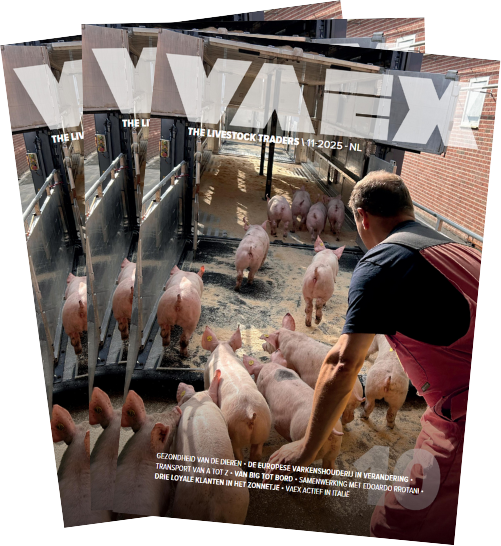
Our magazine offers you a glimpse into the world of international pig and livestock trade. With up-to-date market information, inspiring stories, and practical insights. For everyone who wants to stay informed and discover new opportunities.