The Long Tail
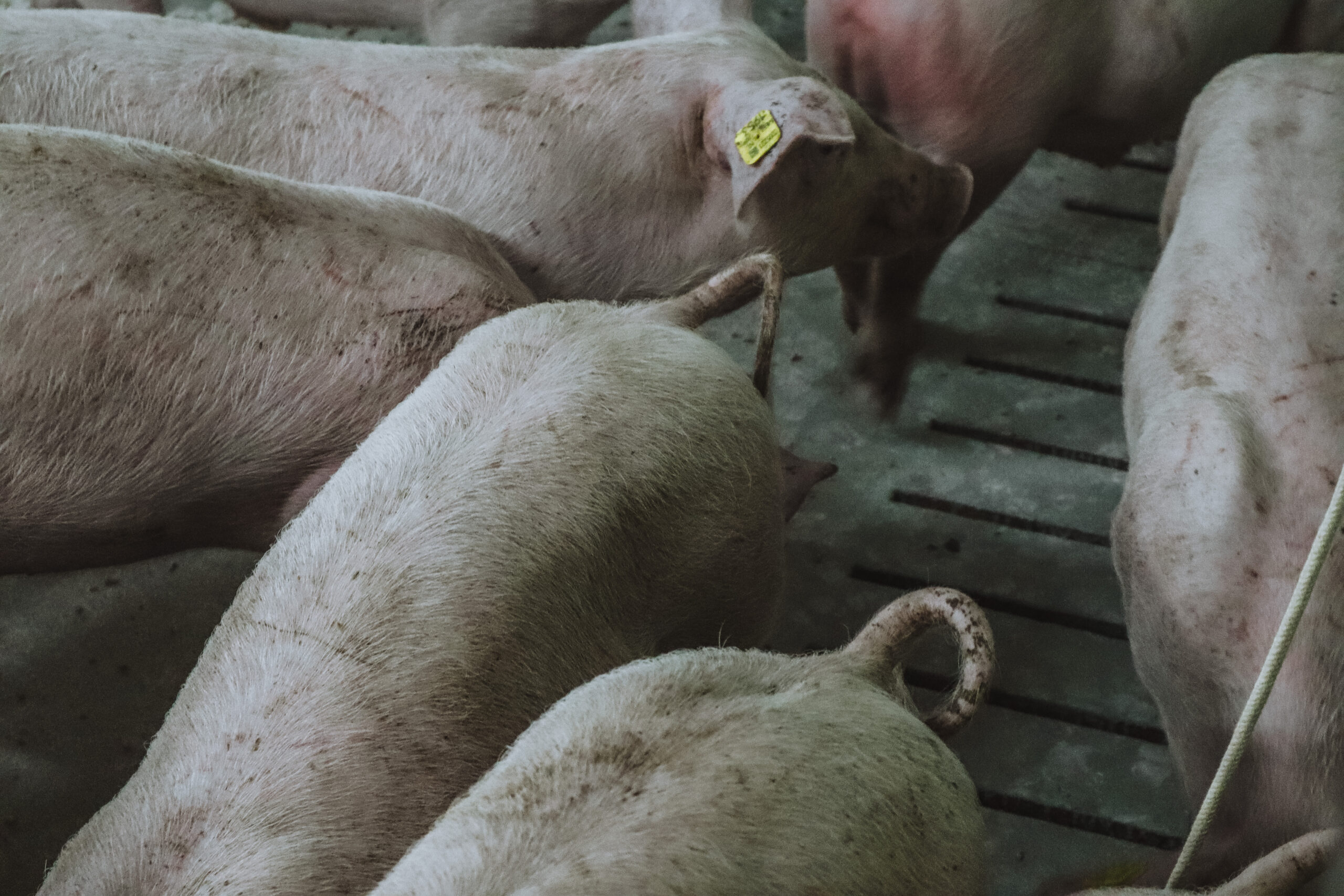
There is much debate about the long tail in Dutch pig farming. The tail indeed plays an important role in the life of a pig. The ambition has been stated that from 2030 onwards, tails will no longer be docked. That may seem far off, but it also requires considerable research to develop a good process for keeping pigs with curly tails. We are seeking various perspectives on this new development. We take a look across the border in Germany, consider the hygiene perspective in the HyCare barn, hear from a Dutch feed manufacturer, and explore what the consequences could be for European interest in Dutch piglets.
Mart Smolders
Company: The Schippers Group
A Clean Start
The Schippers Group is known as a hygiene specialist in the sector and views everything from a hygiene perspective. In conversation with Mart Smolders, HyCare director at Schippers, we zoom in on how hygiene positively impacts keeping pigs with long tails.
HyCare, a concept developed by Schippers, specifically focuses on optimizing hygiene and care in pig barns, aiming to reduce stress, promote health, and prevent unwanted behaviors such as tail biting. According to Mart Smolders, HyCare is not only about hygiene but also about promoting pig welfare: “We strive to create an environment where pigs are comfortable and can display natural behaviors, including using their tails. HyCare goes beyond just physical hygiene. It’s about creating an environment where pigs feel at ease and experience less stress,” says Smolders.
Demo Farm ‘The Long Tail’
One of the most urgent issues in pig farming is the problem of tail biting. This behavior, caused by a combination of factors such as climate, hygiene, nutrition, and care, leads to health problems and economic losses. Schippers’ demo farm ‘The Long Tail’ addresses this issue by improving conditions for the pigs. “By applying our HyCare strategy, we create an environment where pigs are less stressed and less likely to engage in unwanted behaviors,” says Smolders.
The project demonstrates that an integrated approach, systematically addressing all factors, is effective in reducing tail biting. Smolders emphasizes that it’s not about testing a single measure, but about a comprehensive package of measures that together ensure better living conditions and health for the pigs. The results are promising: pigs with long tails in Schippers’ demo barn show less stress and aggression, leading to less tail biting and improved welfare.
This project addresses both ethical considerations and economic efficiency by reducing tail biting among pigs. The goal is to improve animal welfare while also optimizing the farmer’s economic performance.
Challenges and Future Perspectives
With European regulations becoming increasingly strict, it is essential for pig farmers to adapt. Smolders notes that the Netherlands often leads in social developments, with other countries following. “We need to work towards a system where we are not dependent on individuals, but where the basic conditions are in order for everyone.”
Although the results are positive, Smolders acknowledges that implementing the HyCare system brings challenges. “It requires a different way of working and management. It’s not a ready-made solution you simply add to your existing system. It calls for a sanitary revolution within companies,” he says. This means a significant change in working methods and a high degree of discipline and consistency in applying hygiene measures.
Smolders stresses the importance of a robust system that does not depend on individual caretakers. This requires cooperation and belief in the system, but the benefits are clear: better pig health and economic advantages for farmers.
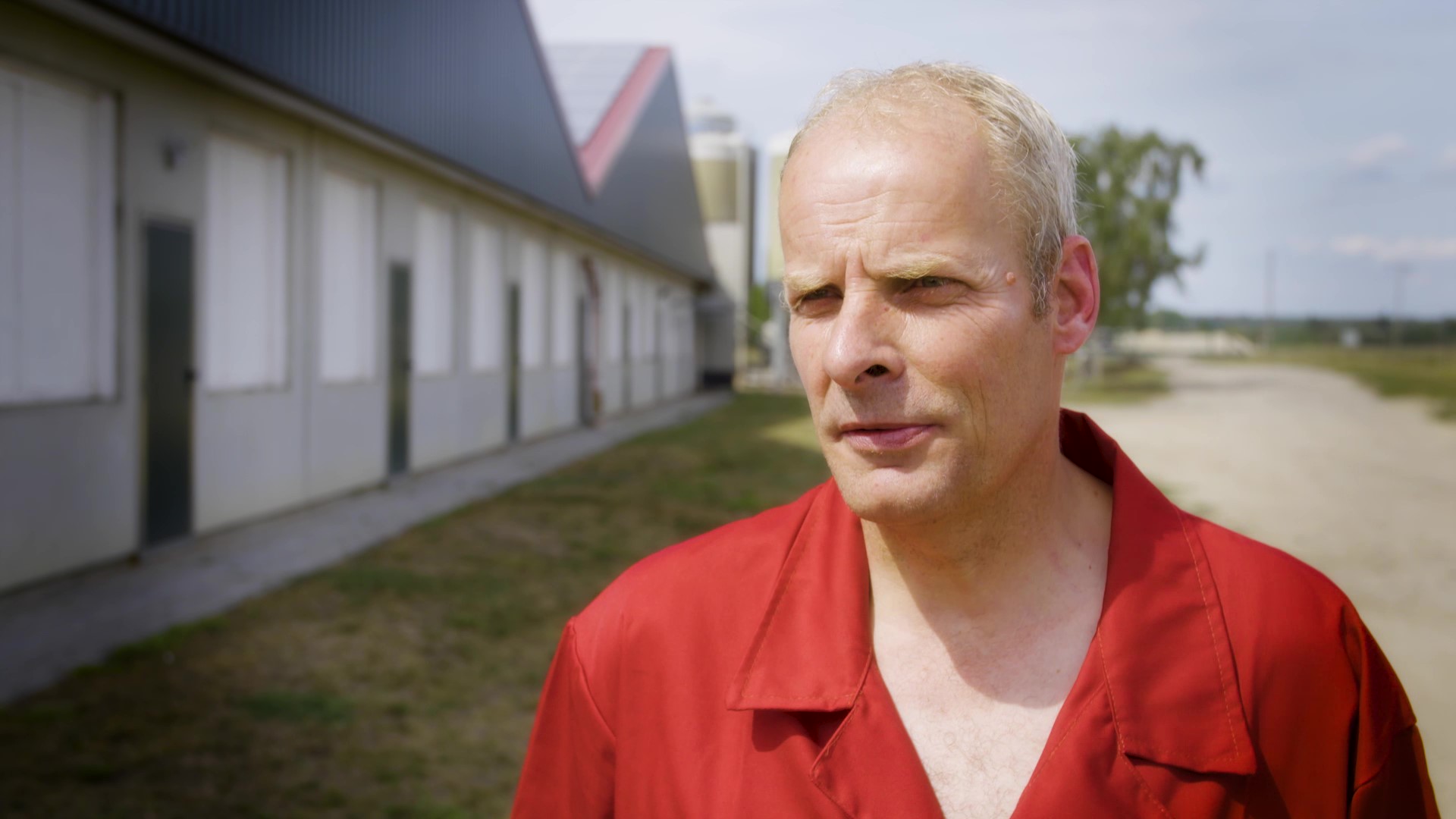
Leon van Dijck
Company: Schweinehaltung Düben GmbH & Co. KG
Germany Leading the Way in Long Tails
Germany has taken a leading role in animal welfare measures for pigs. For example, it is already mandatory in many German farms to keep 5-10% of pigs with long tails, and from 2024 this percentage is likely to increase further. Leon van Dijck explains: “In Germany, animal welfare regulations are stricter and there are already experiments with undocked tails. This approach is supported by the Green Party, which strongly advocates for sustainability and animal welfare.”
Leon van Dijck, owner of Schweinehaltung Düben, a gilt breeding farm in Germany, already has experience with keeping pigs with long tails. “We already supply 5% of our piglets with long tails to our customers,” says Van Dijck. This requires an intensive approach, where good management and staff vigilance are crucial. “For example, if a feeder is empty, this can lead to biting behavior. That’s why we must ensure there is always enough feed and water available.”
Enrichment Materials
Keeping pigs with long tails brings various challenges. The biggest risk is tail biting, which can lead to serious infections and diseases. To counter this, it is crucial that barns are well managed. This means staff must be trained to act quickly at signs of tail biting, and there must be enough enrichment materials available. Regularly changing these materials is essential to keep the animals’ attention.
Good Genetics
The trial period with long tails serves as preparation for the full implementation of these welfare standards in 2030. This also requires adjustments in breeding practices, such as selecting genetics less prone to biting behavior. Van Dijck believes the sector must be prepared for this: “We will need to breed more for calm genetics that are less aggressive.” In short, multiple factors influence piglet biting behavior. “Collaboration within the sector is therefore very important to make this a success,” says Leon.
Opportunities and Threats
The transition to long tails offers both opportunities and threats. On the one hand, it can contribute to a better image of the sector and greater consumer acceptance. On the other hand, it brings higher costs due to the need for better management and the risk of infections. Van Dijck notes: “Although keeping long tails increases costs, in the long run it can contribute to a more sustainable and ethical pig industry.”
European Regulations
In 2030, regulations on long tails will come into effect across Europe. Germany imports many piglets, for example from Denmark. When these piglets are imported, their tails are still docked. This is currently still allowed under German regulations, but eventually imported piglets will also need to have long tails. If the German government implements these regulations before 2030, it will also have a major impact on the countries from which Germany imports.

Alfons Vrijkorte
Company: Compound Feed Company Gebrs. Fuite BV
Nutrition is one of the links
Alfons Vrijkorte is a farmer's son and has been involved with pigs his entire life. Since 1986, he has worked in the compound feed sector, spending the last 14 years at Feed Company Gebrs. Fuite BV. At that time, pig feed was still an unfamiliar branch for Gebrs. Fuite, but a lot of progress has been made over the past 10 years. On paper, Alfons is a team leader, but he can be found in the barn every day. Together with the farmers, he examines the feed composition, checks for any problems, and determines whether adjustments need to be made.
Alfons emphasizes that the right nutrition can have a direct impact on the overall health and behavior of the animals. “Our feed is developed to support the natural growth and health of pigs, and with the long tail movement in mind, we continuously adapt our formulas to keep the animals as comfortable and healthy as possible,” Alfons says.
Feed as a tool against tail biting
An important aspect of keeping pigs with long tails is minimizing tail biting, a behavior often caused by stress and a lack of nutrients. Alfons explains that nutrition plays a crucial role in reducing stress and promoting healthy behavior patterns in pigs. “We are constantly working to improve our feed composition to not only enhance the physical health of the pigs but also to influence their behavior. By offering the right balance of nutrients, we can significantly reduce the risk of tail biting,” he says.
Ongoing developments
“Endotoxins cause stress in the animals, which can lead to unwanted behaviors such as tail biting. By formulating our feed to reduce the production of endotoxins, we can contribute to better welfare for the pigs,” Alfons explains.
In addition, there are test farms where different feed formulas are being tried out to see which are most effective in supporting pigs with long tails. Experiments are also being conducted with feed additives that help calm the animals’ behavior.
The future of long tails
Alfons has a clear vision for the future. “In two years, we will have made significant progress in our research and trials. We expect that by then, some farms will have fully transitioned to keeping pigs with long tails. In ten years, this will be the norm throughout the sector,” he predicts. This transition will not be without challenges, but the ongoing improvement of nutrition and collaboration with other sectors will ensure that the objectives are achievable.
Limitations and regulations
However, there are also limitations and regulations to take into account. “The small components that make feed more expensive must be balanced with our competitive position. We can’t just raise costs, or we’ll lose our market position. That’s why we’re working hard behind the scenes on improvements without increasing costs,” says Alfons.
Availability of raw materials also plays a role. “Soy, for example, is a controversial topic due to CO2 reduction. We need to anticipate possible future restrictions and look for sustainable alternatives,” he says.
Questions from farmers
Alfons notes that farmers are already asking questions about adjusting feed for pigs with long tails. “We have been proactive in developing feed that reduces stress and positively influences animal behavior. Farmers are now beginning to see the benefits and are requesting adjustments to the feed composition,” he explains.
Collaboration within the sector
Finally, Alfons emphasizes the importance of collaboration within the sector. “The future of pig farming with long tails depends on cooperation between different chain partners, such as genetics, health, and nutrition. By working together on solutions, we can make great strides forward,” he concludes.

Gert Posthouwer
Company: VAEX | The Livestock Traders
Working together to initiate change
With the upcoming ban on pig tail docking in 2030, many pig farmers are facing major challenges. Gert Posthouwer, sales manager for piglets in Eastern and Western Europe at VAEX - The Livestock Traders, discusses the current situation, the obstacles in export, and how VAEX can play a role in the transition to a future with piglets with long tails. Gert Posthouwer emphasizes: “The challenge is not only in adapting our own processes, but also in guiding our customers and suppliers through this transition.” For VAEX, this means we need to work more closely with feed suppliers, genetics experts, and barn designers to find solutions that reduce aggressive behavior in pigs.
Leading countries
Within Europe, there are already countries proactively adapting to the new regulations. Germany, the Netherlands, and Denmark are seen as frontrunners. In Germany, regulations currently still vary by region. “In Central and Eastern Germany, for example, the rules are stricter than in other parts,” says Posthouwer. This shows the complexity of implementing uniform European regulations.
Crucial adjustments
For a successful transition to a future with long tails, several crucial adjustments are needed. Genetics plays a key role in this. “It’s important to start now with genetic adjustments to breed less aggressive pigs,” says Posthouwer. Less aggressive pigs will be less inclined to bite each other’s tails, which is one of the reasons for the current docking practice.
Experiences in different countries
Experiences with pigs with long tails vary greatly by country. In Denmark, some farmers are already experimenting with 1% of their herd. “But even this small percentage can cause problems,” says Posthouwer. “Customers don’t want piglets with long tails and call immediately if they receive a few.” In Hungary, pigs are kept on straw, which slows growth but contributes to welfare and reduces tail biting.
The role of VAEX
VAEX can play an important role in this transition. Posthouwer stresses the importance of collaboration: “We need to bring parties together, such as feed suppliers, breeders, and farmers, to ensure everyone is ready for 2030.” Through demonstration barns and pilot projects, the sector can prepare for the practical aspects of keeping pigs with long tails. “We need to work with our partners on solutions that ensure both animal welfare and economic viability for farmers,” says Posthouwer.
Farmers also need to start preparing for the changes now. Posthouwer recommends making genetic adjustments and reviewing feed and barn design. It’s essential to ensure pigs don’t get bored, as boredom can lead to aggressive behavior. “Adjusting the feed and improving the barn climate are important steps,” he says.

Magazine
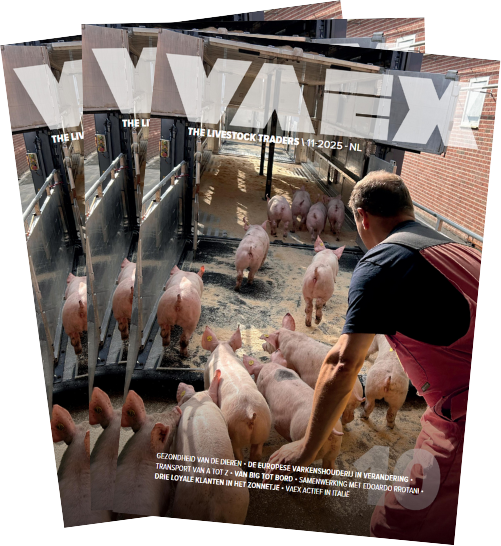
Our magazine offers you a glimpse into the world of international pig and livestock trade. With up-to-date market information, inspiring stories, and practical insights. For everyone who wants to stay informed and discover new opportunities.